# Design for Manufacturability Review: Improving Product Design and Production Efficiency
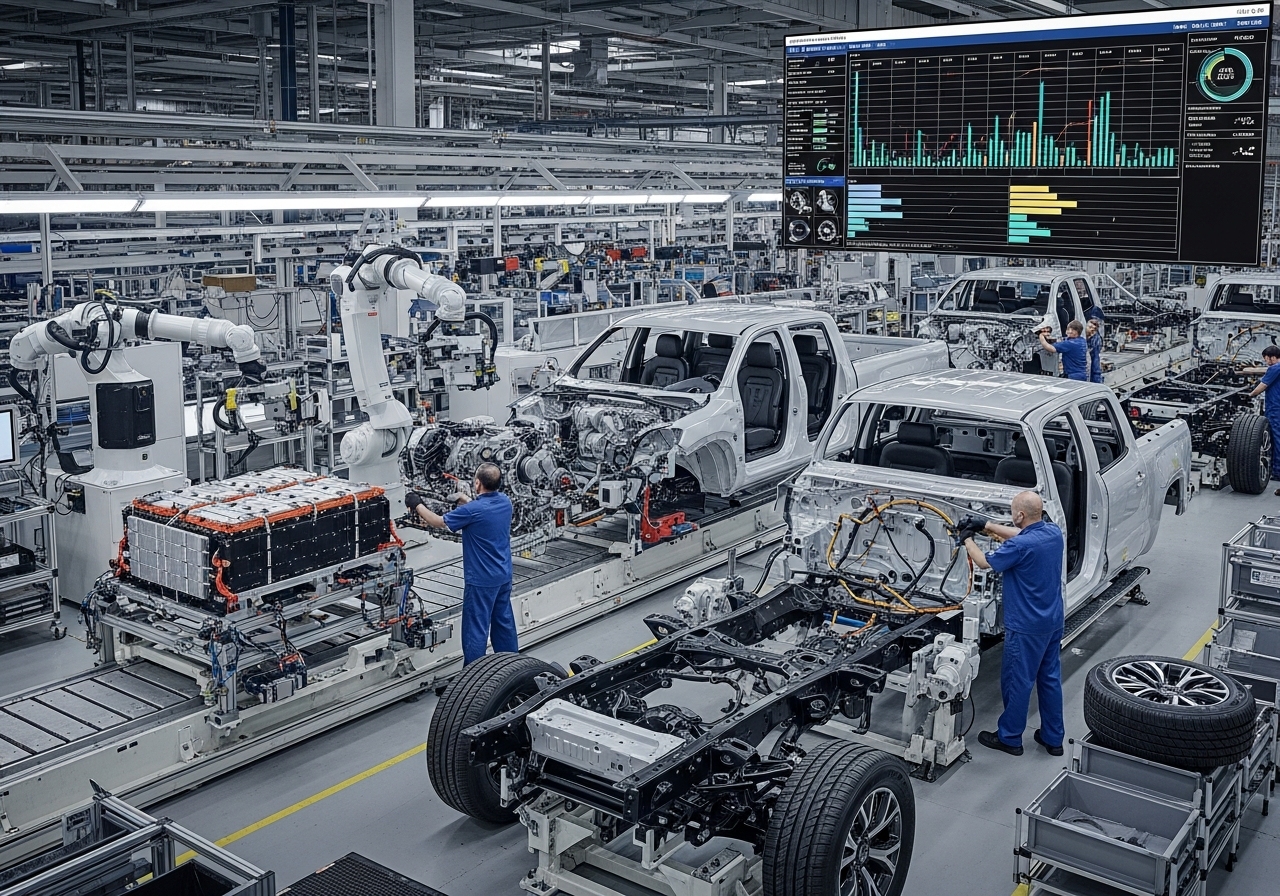
Developing a successful product requires more than creating an attractive design or ensuring that it performs its intended function. Businesses must also consider how easily, efficiently, and economically the product can be manufactured. A **[design for manufacturability review](https://innovation.world/manufacture/)** helps engineers and manufacturing teams evaluate product designs before production begins. It identifies potential manufacturing challenges, highlights opportunities for improvement, and helps reduce unnecessary production expenses. By examining materials, component geometry, manufacturing methods, tolerances, and assembly requirements, businesses can create products that meet performance expectations while remaining practical to manufacture.
**Understanding Design for Manufacturability**
Design for manufacturability, commonly known as DFM, is an engineering approach that considers manufacturing requirements during product design and development. Its primary objective is to make products easier and more cost-effective to produce without compromising quality, functionality, or reliability.
A manufacturability review examines whether a proposed design is compatible with available production equipment, materials, manufacturing processes, and assembly capabilities.
This evaluation is valuable for startups developing new products as well as established manufacturers improving existing product lines. Identifying potential issues early can prevent expensive redesigns and production interruptions later.
**Evaluate Product Geometry and Complexity**
Product geometry has a direct influence on manufacturing difficulty. Complicated shapes, unnecessary features, thin walls, deep cavities, and difficult-to-access surfaces can increase production time and costs.
During a design review, engineers examine the component's dimensions, shape, and structural features to determine whether they can be produced efficiently.
For example, a machined component with several unnecessary pockets may require additional cutting operations and longer machine time. Simplifying its geometry could reduce production complexity while preserving its essential functionality.
Designers should also consider how components will be positioned, supported, and handled during manufacturing.
**Choose Suitable Materials**
Material selection is another important consideration during a **[manufacturability review](https://wherewechat.com/blogs/view/33741)**. Different materials have different processing characteristics, availability, mechanical properties, and costs.
Aluminum may be appropriate for lightweight machined components, while stainless steel can be suitable for applications requiring corrosion resistance. Engineering plastics may offer advantages for lightweight products and injection-molded components.
Engineers should evaluate material properties alongside manufacturing requirements. Important considerations include strength, hardness, thermal performance, chemical resistance, and material availability.
Choosing an appropriate material can improve production efficiency and help prevent unnecessary manufacturing complications.
**Review Manufacturing Process Compatibility**
A product design must be compatible with the manufacturing process selected to produce it. Different processes have specific capabilities and limitations.
Common manufacturing methods include CNC machining, injection molding, casting, sheet metal fabrication, and additive manufacturing.
For example, injection-molded components require consideration of draft angles, wall thickness, material flow, and mold design. CNC-machined components require attention to tool accessibility, machining tolerances, and setup requirements.
During the review, engineers should determine whether the proposed design can be manufactured using the available equipment and whether alternative processes could provide better results.
**Examine Tolerances and Dimensional Requirements**
Dimensional tolerances determine how much variation is acceptable in a manufactured component. Although tight tolerances may be necessary for certain functional features, applying them unnecessarily can increase manufacturing costs.
A manufacturability review should identify which dimensions are critical for product performance and assembly.
Engineers can then establish suitable tolerances based on functional requirements and the capabilities of the selected manufacturing process.
This approach helps avoid unnecessary precision requirements while ensuring that important components fit and operate correctly.
**Improve Assembly and Component Integration**
Manufacturing efficiency depends not only on producing individual components but also on assembling them into a finished product.
A design review should examine the number of parts, fastening methods, alignment requirements, and accessibility during assembly.
Reducing unnecessary components can simplify assembly operations and decrease inventory requirements. Standardized fasteners and modular designs may also improve manufacturing consistency.
Where appropriate, integrating multiple functions into a single component can reduce the number of assembly operations.
**Identify Opportunities to Reduce Production Costs**
Cost optimization is one of the major benefits of a design for manufacturability review. Engineers can identify design features that increase material consumption, machining time, tooling expenses, or assembly complexity.
Potential improvements include simplifying component geometry, reducing unnecessary material usage, selecting more readily available materials, and standardizing components.
These changes should always be evaluated against product performance and quality requirements. A lower manufacturing cost is valuable only when the finished product continues to satisfy its intended specifications.
**Collaborate Across Engineering and Manufacturing Teams**
An effective review requires cooperation between product designers, mechanical engineers, production specialists, procurement professionals, and quality teams.
Designers understand the intended product functionality, while manufacturing specialists understand equipment limitations and production capabilities. Bringing these perspectives together helps identify practical solutions.
Early communication with suppliers can also provide valuable information about material availability, tooling requirements, production lead times, and potential design improvements.
**Use Prototypes to Validate Design Improvements**
Prototyping provides an opportunity to evaluate whether proposed design changes work as expected. Physical samples can reveal assembly difficulties, dimensional problems, and manufacturing limitations that may not be obvious in digital models.
Testing prototypes before full-scale production allows teams to make necessary adjustments while development costs remain manageable.
Feedback from prototype evaluation should be incorporated into the final design documentation before production approval.
**Conclusion**
A design for manufacturability review is an important step in developing products that are practical, reliable, and economical to produce. By examining geometry, materials, manufacturing processes, tolerances, assembly requirements, and production costs, engineering teams can identify improvements before manufacturing begins. Collaboration between design and production specialists further strengthens the review process and supports better decision-making. Integrating manufacturability considerations throughout product development helps businesses reduce production complexity, improve quality, and achieve more efficient manufacturing operations.